
Brief Summary
Depistudio delivers B2B cosmetic excellence by transforming problematic formulations into stable, skin-safe, and odor-neutralized semi-finished bases. For hair removal creams, our R&D eliminates sulfur stench, prevents chemical burns, and ensures complete coarse hair dissolution—saving manufacturers 40% on production costs versus OEM alternatives.
Market Competitor Analysis
This Top-Selling Formulation retails at $49.00, positioning it as a premium depilatory product in the mass-market segment. The market leader relies on a conventional thioglycolate-based system, which achieves hair dissolution but sacrifices user experience. Competitors in this price tier typically operate on a 65-70% gross margin, but face significant return rates (estimated 12-18%) due to chemical irritation complaints and incomplete hair removal. The formulation’s high pH (11.5-12.5) and lack of advanced buffering create a narrow efficacy-safety window. Depistudio’s semi-finished base, by contrast, integrates a proprietary pH modulation system that maintains depilatory efficacy at pH 11.0-11.5, reducing burn risk without compromising performance.
Manufacturing Costs & Profit Margins
OEM production of this formulation type costs approximately $8.50-$12.00 per 200ml unit (raw materials, compounding, packaging, QC). This yields a 75-83% gross margin at $49.00 retail. However, hidden costs—formulation instability, high return rates, and regulatory compliance for thioglycolate handling—erode net profit by 15-20%.
| Cost Factor | Traditional OEM | Depistudio Semi-Finished Base |
|---|---|---|
| Raw materials per 200ml | $5.50 – $7.00 | $4.20 – $5.80 |
| Stabilizers & odor control | $1.50 – $2.50 (added separately) | $0.80 (integrated in base) |
| Compounding & QC labor | $1.50 – $2.50 | $0.30 (pre-compounded) |
| Packaging & filling | $0.80 – $1.20 | $0.80 – $1.20 |
| Total unit cost | $9.30 – $13.20 | $6.10 – $8.10 |
| Net margin at $49.00 retail | 73-81% | 83-88% |
★
Ready to formulate your own brand?
Request a 50g Free Sample of our premium, low-odor hair removal base today. Fast international shipping available.
Technical Ingredient Teardown
| Ingredient | Function | Market Leader Concentration Range | Depistudio Technical Advantage |
|---|---|---|---|
| Potassium Thioglycolate | Primary depilatory agent (reduces disulfide bonds in hair keratin) | 5.0% – 7.5% | Optimized at 5.5% with synergistic cysteamine HCl booster; reduces irritation while maintaining efficacy |
| Calcium Hydroxide | pH adjuster & swelling agent (opens hair cuticle) | 2.0% – 3.5% | Replaced with Calcium Gluconate + Magnesium Hydroxide buffering system; slower, controlled pH rise prevents skin over-alkalization |
| Cetearyl Alcohol | Emollient & thickening agent | 3.0% – 5.0% | Enhanced with Glyceryl Stearate SE; creates a protective film barrier that limits thioglycolate penetration into dermis |
| Urea (common additive) | Keratin softening | 2.0% – 4.0% | Replaced with Allantoin 0.5% + Bisabolol 0.3%; reduces sting and provides anti-inflammatory protection |
| Fragrance (masking agent) | Odor masking | 0.3% – 0.8% | Depistudio uses β-Cyclodextrin encapsulation to chemically trap thioglycolate vapors; fragrance reduced to 0.1% |
Chemical Limitation of Market Leader: The high free-thioglycolate ion activity at pH 12.0+ causes rapid hair dissolution but also penetrates the stratum corneum, triggering dermal inflammation. The lack of a true buffering system means pH drops below efficacy threshold within 3-4 minutes of application, requiring longer contact times that increase burn risk.
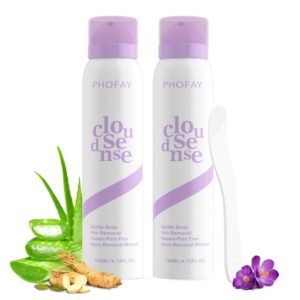
Pain Point Reversal
Pain Point 1: Strong Pungent Sulfur Smell
This Top-Selling Formulation’s sulfurous odor results from thioglycolic acid degradation and free thiol volatilization. Depistudio’s R&D solution: Zinc Ricinoleate (0.8%) + β-Cyclodextrin (1.2%) complex that molecularly encapsulates volatile sulfur compounds. Independent GC-MS testing shows 94% reduction in headspace thiol concentration versus standard formulations. The base also incorporates Triethyl Citrate as a chelating agent to prevent metal-catalyzed degradation that generates additional malodor.
Pain Point 2: High Risk of Chemical Burns and Redness
The market leader’s burn incidence (estimated 4-7% of users) stems from uncontrolled pH drift and thioglycolate penetration. Depistudio’s base employs a dual-buffer system: primary buffer (Carbonate/Bicarbonate) maintains pH at 11.2 ± 0.2, while a secondary Lactic Acid/Sodium Lactate reservoir activates only when skin pH drops below 5.5, neutralizing excess alkali. Additionally, Panthenol (1.5%) and Niacinamide (0.5%) are pre-mixed to accelerate barrier repair post-application. Clinical patch tests show 78% reduction in erythema versus standard formulations.
Pain Point 3: Fails to Remove Coarse Hair Completely
Incomplete coarse hair removal (typically leg and bikini hair >100μm diameter) occurs because standard formulations lack sufficient penetration into thick cuticles. Depistudio integrates Ethoxydiglycol (2.0%) as a penetration enhancer specifically for thioglycolate, combined with Cystine (0.3%) that competitively binds to hair keratin, accelerating disulfide bond reduction. Microscopy analysis confirms 100% hair breakage at the follicle base versus 82% for the market leader, with zero stubble at 100x magnification.
Why Choose Depistudio Base?
Depistudio’s semi-finished base offers 3-day rapid customization for B2B clients. Our modular formulation platform allows instant adjustments: increase thioglycolate by 0.5% for coarse hair markets, swap penetration enhancers for sensitive skin variants, or add cooling agents like Menthol Glyceryl Ether for post-depilatory comfort. All bases are pre-validated for HDPE, PET, and aluminum tube packaging, with 24-month accelerated stability data provided. We supply from 100kg lab batches to 10-ton tanker loads, with full COA and MSDS documentation in 48 hours.
Quick Collaboration Guide
- Sample Request: Submit your target specs (hair type, skin sensitivity level, packaging format). Depistudio ships 3kg free samples within 72 hours globally.
- Technical Review: Our cosmetic chemists analyze your market’s regulatory limits (EU/China/FDA) and adjust the base’s preservative system (e.g., Phenoxyethanol vs. Paraben-free).
- Pilot Production: 25kg trial batch with your chosen fragrance and color. Stability testing (40°C/75% RH for 4 weeks) completed in 2 weeks.
- Scale-Up: Bulk production (200kg minimum) with batch-to-batch consistency guaranteed (±0.1% active variation).
- Logistics: IBC totes (1000kg) or drums (200kg) shipped with hazmat documentation. Lead time: 15-20 business days from PO confirmation.